
The first time I played Backgammon, I was 12, sitting across from my grandfather who wore a smile that meant “I’m going to crush you politely.” And he did. But even as my checkers got sent to the bar again and again, I was hooked.
Backgammon is one of those games that teaches you something new every time you play — not just about dice or strategy, but about patience, risk, and people. So whether you’re picking up a set for the first time or finally trying to understand what that weird triangle board is all about, I’m here to help.
Understanding the Backgammon Board
The board can look intimidating — a sea of triangles and numbers — but give it five minutes and it’ll click. The design is elegant once you understand what everything does.
The Board Layout
Picture the board as a racetrack shaped like a horseshoe. You’re racing your 15 checkers in a U-shaped path from the far side to your home quadrant. The triangles, called points, are just parking spots — 24 of them in total.
As a kid, I thought of them as shark fins. That may not help you win, but it’s how I remember them.
The Checkers and Dice
Each player gets 15 checkers in their color — typically black or white, but I once played with a set that used red and sky blue and felt like I was gambling in Miami.
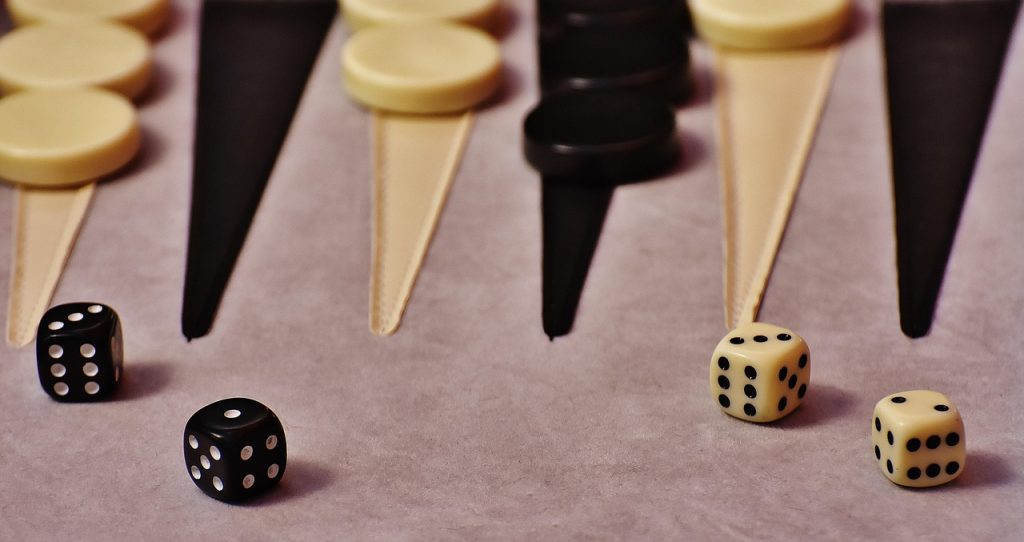
You also get two standard dice, and then there’s the doubling cube, which we’ll get to later — it’s where things get spicy.
The Doubling Cube
This six-sided cube (2, 4, 8, 16, 32, 64) isn’t rolled like regular dice. It’s used to raise the stakes. I remember my buddy Kyle trying to double the game after move two. Bold strategy. He lost in five turns.
The Objective of the Game
The whole point is to get your checkers home before your opponent does. That’s it. Of course, like anything simple on the surface, it gets layered quickly.
Moving Checkers
Let’s say you roll a 3 and a 5. You can move one checker three spaces and another five — or move one checker eight spaces, as long as both parts of the move are legal.
Think of it like navigating through traffic. Can’t land on a car with two passengers (two opponent checkers). Can slide into a spot with none, or one (which you bump — and that’s fun).
Blocking and Hitting
A blot — that’s a checker all alone. If your opponent leaves one out in the open, land on it and you send it to the bar, which is like time-out in Backgammon. Nothing like flipping the game with one lucky hit.
I once won a tournament game because my opponent got cocky and left two blots exposed. I hit both in one turn. It was delicious.
Bearing Off
When all your checkers make it into your home quadrant (points 1–6), you can begin bearing off — removing them from the board. It’s like watching your army board the final escape ship.
First player to bear off all 15 wins. Simple. Brutal. Beautiful.
Setting Up the Game
Every game starts the same way. There’s a sort of ritual to it — lining up the checkers just right, like placing pieces in a story that’s about to unfold.
How to Start the Game
Both players roll one die. Whoever rolls higher goes first, and they play that roll — not rerolling. I once had someone reroll after winning the toss. That game went sideways from there.
Checker Positioning
Here’s the standard setup (for both players):
- 2 checkers on your 24-point
- 5 on your 13-point
- 3 on your 8-point
- 5 on your 6-point
The first time I had to set it up, I got everything backwards. If you’re unsure, just mirror your opponent until it starts to make sense.
Who Goes First
High die wins, uses that roll, then turns alternate. No takebacks, no best-of-three on the roll. We’re not flipping coins here.
How a Turn Works
Rolling the Dice
Roll both dice. If you roll doubles — like 4-4 — you get to move four times instead of two. That’s where things can really swing. I call it the “double jackpot.”
Legal Moves
Use both numbers if you can. If you can’t, use one. If you can’t do either, tough luck — your turn’s over. Some turns are like poetry. Others feel like trying to park a bus in a tight alley.
Getting Hit and Entering
If your checker gets bumped (hit), it goes to the bar. You must re-enter it into the opponent’s home quadrant before doing anything else. It’s like being benched until you can sneak back into the game.
Sometimes a well-placed hit can keep your opponent stuck for multiple turns. That’s chess-level evil — and I love it.
Special Rules and Strategies
The Doubling Cube Strategy
Use it when you’re ahead, or when you want your opponent to think you’re ahead. Once they accept the double, the cube is theirs — they’re the only one who can offer the next double.
I once got doubled into a backgammon loss (worth triple points). I still bring it up at dinner parties. Nobody cares, but I do.
Back Games and Prime Building
A prime is when you control six points in a row — like a wall your opponent can’t pass. A back game is holding two or more anchors deep in your opponent’s home board, trying to trap them when they start bearing off.
These tactics are like jazz — better appreciated with time and a few stumbles.
Once you understand the rules, the next step is learning basic backgammon strategy.
FAQ: Backgammon Basics
How many pieces are there?
15 checkers per player. No more, no less.
Can you skip a turn?
Only if you’ve got no legal moves. Otherwise, you’re playing.
What’s a gammon or backgammon?
- Gammon: Opponent hasn’t borne off any checkers when you win. That’s double points.
- Backgammon: Opponent still has checkers on the bar or your home board. Triple points. Rare. Beautiful. Savage.
Do I have to use both dice?
Yes, if possible. If you don’t, and your opponent notices, prepare for a lecture. Or just a re-roll.
What if both players want to double?
Only the player who currently controls the cube can offer a double. It’s a one-person power play. Handle it with care.
Final Thoughts from Samuel
Backgammon is one of those games that grows with you. At first, it’s all about learning the rules and not messing up your turns. But then you start to see things — patterns, traps, momentum shifts. That’s when it really gets fun.
My advice? Don’t worry about losing. Lose fast, lose smart. And when you win, do it with a grin. Backgammon teaches you humility and boldness, often in the same turn.
Now go roll the dice. And if you hit a double six on your first game — well, buy yourself a coffee. That’s good luck worth savoring.
The best way to really learn backgammon is to practice against real opponents online.